
This complete guide to Fes medina tour covers everything you need to know: Navigate Fes el-Bali — the world’s largest living medieval city — with this complete expert guide to tanneries, mosques, and hidden gems.
Fes el-Bali is the world’s largest urban UNESCO World Heritage Site and the most complete medieval city anywhere on earth. Its 9,400 streets house 156 mosques, 12 hammams, working tanneries unchanged for 1,000 years, and a university founded in 859 AD — older than Oxford. Navigating it without a guide is either an adventure or a disaster, depending on your temperament. This guide helps you do it right.
The Three Districts You Need to Know
Fes el-Bali (Old Fes)
The UNESCO-listed medieval city — 1,200 years old, entirely car-free, home to 150,000 people. This is where you spend 90% of your time in Fes. Its streets narrow to 50cm in places; mules are the delivery vehicle of choice.
Fes el-Jdid (New Fes)
Built by the Merinids in 1276 — “new” by Fes standards. Houses the Royal Palace (exterior only for tourists) and the mellah (Jewish quarter) with its distinctive wrought-iron balconies.
Ville Nouvelle (French New Town)
The French colonial district built from 1912 onwards. Wide boulevards, restaurants, banks, and your hotel if you’re staying outside the medina.
The Chouara Tanneries: What to Know Before You Go
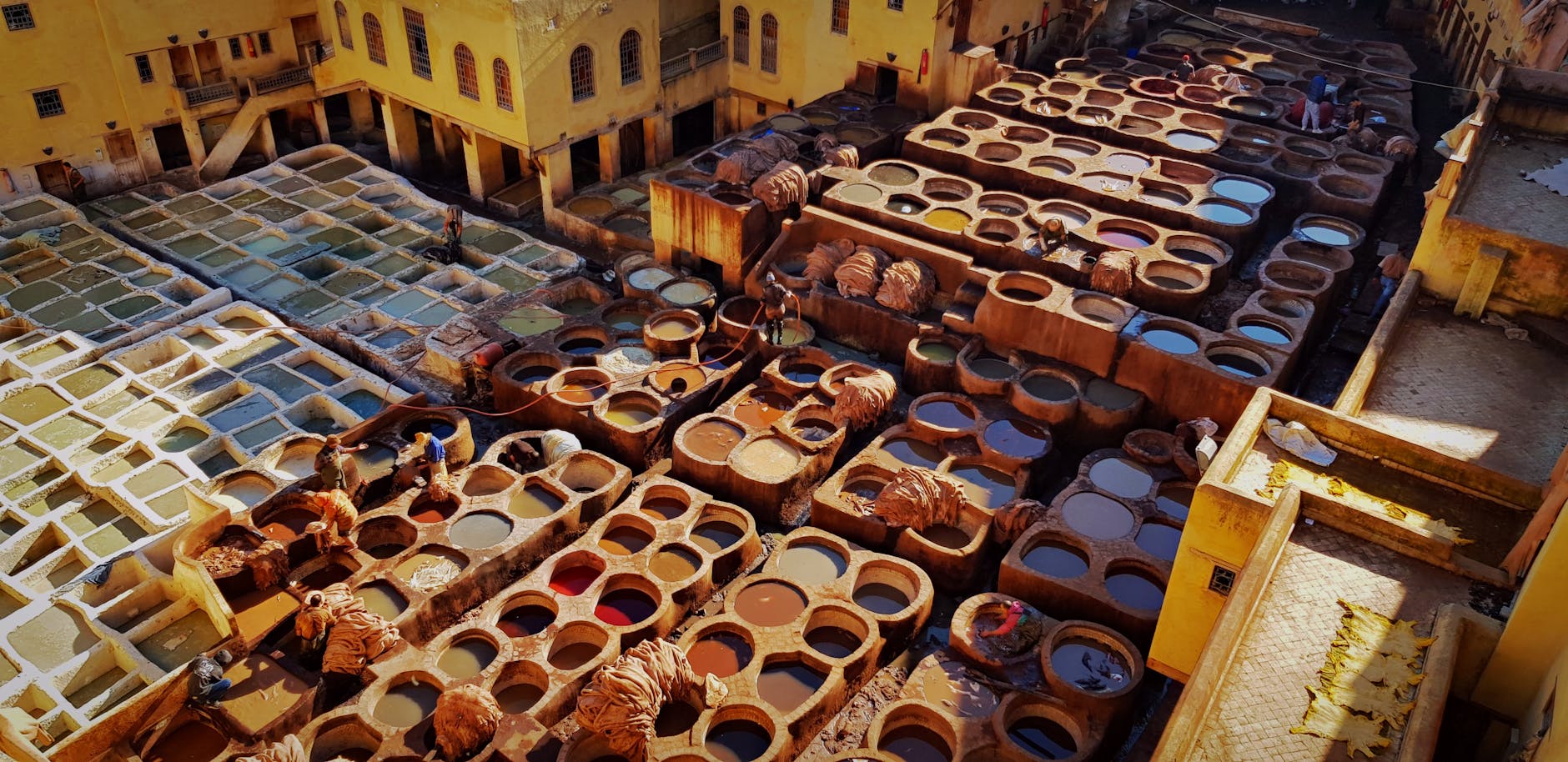
The Chouara tanneries are the most photographed sight in Fes and one of the most extraordinary in Morocco. Workers stand in stone vats of dye — saffron yellow, indigo blue, poppy red — curing leather by hand using methods from the 11th century. The sight from the surrounding leather shop balconies is incredible.
The honest truth: The shops surrounding the tanneries use the view as a selling mechanism — you enter through a leather goods shop, are shown the tannery from the balcony, and then expected to browse (and ideally buy). You’re under no obligation to buy anything. The view is the same from every shop balcony. A sprig of fresh mint is handed to you — use it; the smell of the tanning process is pungent.
Best viewing time: Morning (09:00–11:00) is when workers are most active and dye colours most vibrant. Avoid midday when activity slows.
The Route: Half-Day Medina Walk
- Start at Bab Bou Jeloud (Blue Gate) — the main medina entrance. Photograph it before entering; it’s more impressive from outside.
- Talaa Kebira — the main medina artery. Walk downhill into the medina following this street.
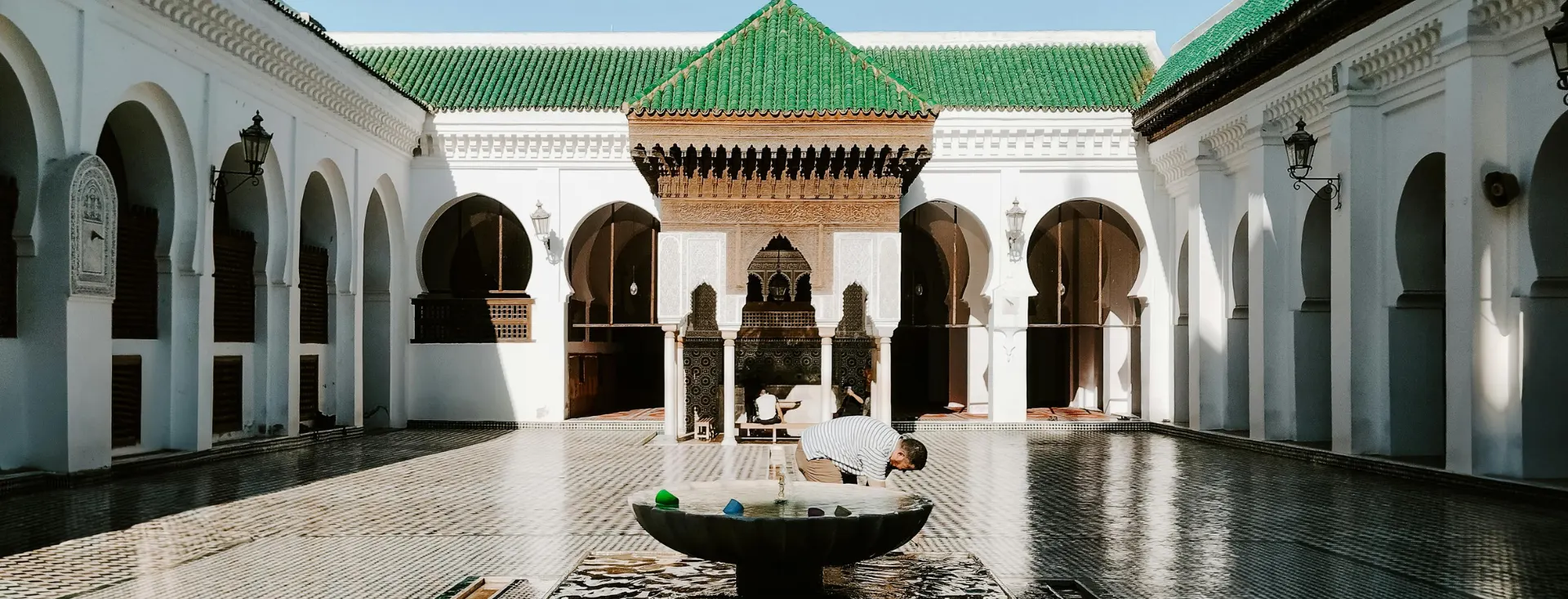
- Al-Qarawiyyin Mosque & University — Non-Muslims may not enter but can view the courtyard through the doorways. Founded in 859 AD — the oldest continuously operating university in the world.
- Zaouia of Moulay Idriss II — the most important shrine in Morocco. Non-Muslims may view the threshold. The wooden bar across the doorway marks the boundary of the sacred space.
- Nejjarine Fountain & Woodworkers Souk — the most beautiful fountain in the medina, surrounded by intricate cedarwood carving.
- Chouara Tanneries — follow signs from Nejjarine (15 min walk). Any leather shop on the north side of the tanneries has a balcony view.
Do You Need a Guide in Fes?
Unlike Marrakech, where independent navigation is manageable, Fes el-Bali genuinely benefits from a licensed guide — not for safety reasons but for context. The history layered into every wall, the story of each craft, the significance of the architecture: without a guide, Fes is visually overwhelming but conceptually empty. A 4-hour licensed guide costs $40–65 and transforms the experience.
Our Desert Tripper Fes guided tours include licensed medina guides, tannery access, a traditional Fasi lunch, and transport between districts.
Where to Eat in Fes
- Café Clock (budget, $10–15) — famous for camel burger, excellent coffee, relaxed traveller vibe
- Restaurant Nur (mid-range, $25–40) — contemporary Moroccan, beautiful Morocco riad guide setting
- L’amandier (splurge, $50–70) — rooftop dining with panoramic medina view
- Street food: Medina stalls sell bissara (bean soup), msemen (flatbread), and sandwiches from $1–4
Day Trips from Fes
Fes is an excellent base for:
- Fes to Merzouga 2-day desert tour — the most dramatic desert approach route
- Volubilis Roman ruins (45 min drive) — the best-preserved Roman site in Morocco
- Meknes imperial city (45 min) — spectacular gates and the El-Hedim square
- Chefchaouen travel guide blue city (2.5 hours) — the most Instagrammed city in Morocco
Frequently Asked Questions: Fes Medina Tour
How long do you need in Fes?
Two days minimum — one for the medina, one for day trips. Three days allows you to slow down and explore individual crafts districts in depth.
Is Fes or Marrakech better?
They’re different experiences. Marrakech is more internationally oriented — more restaurants, more nightlife, more English spoken. Fes is more authentically Moroccan and culturally deeper. Our 10 and 14-day Morocco itineraries include both.
Is it safe to walk alone in Fes medina?
Yes — Fes is safe. The challenge is navigation and managing persistent touts who offer to guide you (for a fee). Confident walking and a downloaded offline map app (Maps.me has excellent Fes medina detail) handle both.
Further Reading & Official Resources
Further Reading & Official Resources
Plan Your Morocco Trip with Desert Tripper
Desert Tripper is a Marrakech-based tour operator specialising in private Sahara desert tours, city breaks, and custom Morocco itineraries. Our team of licensed local guides has been leading travellers through Morocco’s most extraordinary landscapes for over a decade.
We offer:
- Private 3-day Sahara tours from Marrakech or Fes — fully customised for your group
- Luxury desert camps in Merzouga — private tents, en-suite bathrooms, candlelit dinners in the dunes
- Custom Morocco itineraries — 7, 10, or 14 days, built around your interests and budget
Get a free custom quote — we respond within 12 hours with a tailored itinerary for your dates and group size.