
This complete guide to Morocco souvenirs covers everything you need to know: What to actually buy in Morocco — genuine argan oil, Berber rugs, saffron — with real prices and what to skip.
Morocco’s souks are overwhelming, beautiful, and full of both genuine craftsmanship and tourist-grade junk. Knowing what to buy — and what to pay — is the difference between returning home with pieces you’ll treasure and a bag of overpriced trinkets. This is the honest guide.
The Best Things to Buy in Morocco
1. Argan Oil (Huile d’Argan)
Morocco is the only place in the world where argan trees grow. Genuine cold-pressed argan oil — culinary (for cooking and salads) and cosmetic (for hair and skin) — is extraordinary. The problem: most tourist-facing shops sell diluted or fake product.
Where to buy: Women’s cooperatives near Essaouira travel guide or Taroudant. These are government-certified, sell genuine product, and the proceeds go directly to the Berber women who produce it.
What to pay: 250ml cosmetic argan oil: $25–45 at a cooperative. If you see it for $10, it’s diluted.
How to spot genuine: Real argan oil is a deep amber-gold colour, slightly viscous, with a nutty-earthy scent. If it’s clear and odourless, it’s been refined or diluted.
2. Moroccan Rugs (Tapis Berbère)
Hand-woven Berber rugs are Morocco’s most prestigious craft. Every region has distinct styles: Beni Ourain (thick ivory wool with geometric black symbols, from the Middle Atlas), Azilal (colourful and abstract, from the High Atlas), and Kilim (flat-woven, geometric, from the south).
Where to buy: Rug cooperatives in Fes and Marrakech medinas; village cooperatives in the Atlas. Avoid the commission shops guides lead you to.
What to pay: A genuine hand-knotted Beni Ourain (2m x 1.5m): $150–400. Machine-made “Berber rugs” in souvenir shops: $30 — and worth exactly that.
How to spot genuine: Feel the back — hand-knotted rugs have slight irregularities in the knot pattern. Machine-made rugs have a perfectly regular back.
3. Moroccan Leather Goods
Fes and Marrakech are famous for hand-tanned leather — bags, wallets, belts, babouches (leather slippers), and poufs. The Fes tanneries produce the highest quality. Marrakech leather is generally tourist-grade.
What to pay: Genuine Fes leather babouches: $15–30 per pair. A hand-stitched leather bag: $60–150. Decorative poufs (leather floor cushions): $80–200 for a genuine hand-stitched piece.
Red flag: The “genuine leather” claim is common for products that are partly or wholly synthetic. Bend the leather — genuine leather creases naturally; synthetic leather cracks.
4. Moroccan Ceramics (Zellige)
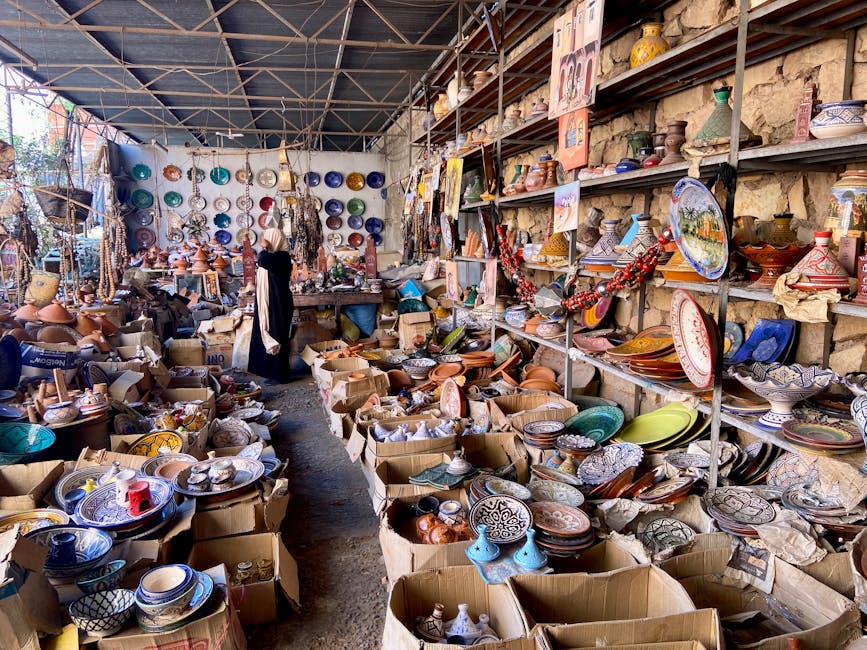
The hand-painted pottery of Fes (blue and white) and Safi (multicolour) are among Morocco’s finest crafts. A genuine hand-painted tagine base: $20–50. A set of 6 painted tea glasses: $15–25. Zellige tile panels (mosaic) are also excellent gifts — lightweight individual tiles cost $5–15 each.
Where to buy: The pottery cooperative outside Fes medina tour guide. Avoid the tourist-facing shops around Marrakech 3-day itinerary in Marrakech (overpriced, often machine-painted).
5. Moroccan Spices
Ras el hanout — the Moroccan spice blend of 20–30 spices — is the best food souvenir from Morocco. Buy from a spice merchant in the souk (not a tourist shop), smell before buying, and expect to pay $3–8 for 100g of good quality blend.
Also worth buying: Preserved lemons ($4/jar), rose water ($5–8 for 500ml from Kalaat M’Gouna), saffron ($8–15/gram — buy from a reputable spice merchant, not a street seller).
Saffron warning: Morocco produces genuine saffron in Taliouine. But tourist-area saffron is frequently adulterated with turmeric or dyed plant material. Buy only from established merchants who show you the threads.
6. Moroccan Metalwork (Lamps & Lanterns)
The pierced brass and copper lanterns — used in riads and restaurants throughout Morocco — are beautiful and practical. Small lanterns ($15–40), large hanging pieces ($80–200). Lightweight enough to pack if you choose the right size. Marrakech and Fes medinas have excellent metalwork souks.
What to Avoid
- Fossils sold as souvenirs: Morocco has genuine 350-million-year-old marine fossils — but most “fossils” sold in tourist shops are plaster replicas. If it looks perfect and costs $5, it’s fake.
- Cheap “Berber” jewellery: Most silver jewellery in tourist shops is not silver. Buy from certified silver merchants or check for hallmarks.
- “Natural” cosmetics in plastic bottles: Most of the argan oil, rose water, and natural cosmetics sold in medina tourist shops are industrially produced. See above for genuine sources.
- Commission shop goods: Any shop a “guide” leads you to pays a 30–50% commission to the guide. The price you pay reflects it. Find shops independently.
Haggling: The Real Rules
Haggling is expected in souks, not in shops with fixed prices (cooperatives, pharmacies, supermarkets). The general rule: start at 40–50% of the asking price and expect to settle at 60–70%. Walking away is the most effective tactic. Never reveal your budget. Once you agree on a price, honour it — walking away after agreeing is considered extremely rude.
Frequently Asked Questions: Morocco Souvenirs
Can I bring Moroccan food guide products home?
EU/UK: spices, preserved lemons, argan oil, and rose water are all permitted. Fresh foods (meat, fresh vegetables) are restricted. Check your country’s customs rules for any live plant products.
Is it better to buy souvenirs in Marrakech or Fes?
For leather and ceramics, Fes is superior quality. For rugs and spices, either city is comparable. Marrakech has more tourist-grade product at inflated prices than Fes. Wherever you buy, avoid commission shops and seek out cooperatives and fixed-price artisan workshops.
Further Reading & Official Resources
Further Reading & Official Resources
Plan Your Morocco Trip with Desert Tripper
Desert Tripper is a Marrakech-based tour operator specialising in private Sahara desert tours, city breaks, and custom Morocco itineraries. Our team of licensed local guides has been leading travellers through Morocco’s most extraordinary landscapes for over a decade.
We offer:
- Private 3-day Sahara tours from Marrakech or Fes — fully customised for your group
- Luxury desert camps in Merzouga — private tents, en-suite bathrooms, candlelit dinners in the dunes
- Custom Morocco itineraries — 7, 10, or 14 days, built around your interests and budget
Get a free custom quote — we respond within 12 hours with a tailored itinerary for your dates and group size.