
This complete guide to Marrakech food tour covers everything you need to know: The essential Marrakech food tour — 8 stops from the morning sfenj stalls to the Marrakech 3-day itinerary midnight mechoui. Written by locals.
Marrakech is one of the world’s great food cities — not for fine dining (though that exists) but for the extraordinary variety and quality of street food, market cooking, and medina restaurant culture. This is the food tour our guides do with serious food travellers. Eight stops, one extraordinary day.
Stop 1: Dawn — Sfenj at the Morning Market (06:30)
Start before the medina wakes up. Near Bab Doukkala, sfenj vendors are frying their first batches by 06:30 — rough doughnut rings sold on a palm leaf string for 2 MAD (20 cents) each. Eat them with a glass of fresh-squeezed orange juice from the stall next door. This is what Marrakech eats for breakfast before tourists wake up.
Cost: 10 MAD ($1) | Location: Bab Doukkala area, any sfenj stall with a morning queue
Stop 2: Breakfast — Msemen & Honey at a Morocco riad guide Café (08:00)
Msemen — the layered, griddle-fried Moroccan flatbread — is the true Marrakchi breakfast. With argan oil and wild honey, it is extraordinary. The best versions are made to order and served with harcha (semolina bread) and a pot of freshly brewed Moroccan thyme tea.
Cost: 50–70 MAD ($5–7) | Where: Café des Épices, Terrasse des Épices, or any medina riad café
Stop 3: Mid-Morning — Harira & Chebakia at Rahba Lakdima (10:00)
The spice market square, Rahba Lakdima, has several harira stalls. Morocco’s signature soup — tomato, lentils, chickpeas, coriander — for 10 MAD a bowl. Eat it with chebakia (sesame honey pastry) as locals do. The combination is improbable but correct.
Cost: 15–20 MAD ($1.50–2)
Stop 4: Lunch — Tagine at a Medina Restaurant (13:00)
For a serious lunch, Café des Épices on the square of the same name serves the best value set lunch in the tourist medina — three courses including Moroccan salads, a tagine (chicken preserved lemon or lamb prune), and fresh fruit, for 150 MAD ($15). The rooftop table is worth waiting for.
Alternatively, navigate to Marché Couvert (the covered market) for a more local lunch — choose a tagine being cooked on charcoal and point to what you want. 50–70 MAD ($5–7).
Stop 5: Afternoon — Tasting at the Spice Souk (15:00)
The spice souk is one of the most sensory experiences in Morocco — walls of cumin, mountains of saffron, baskets of dried roses, and rows of smen (aged Moroccan butter that smells like Parmesan). Buy a 100g bag of ras el hanout (the Moroccan spice blend, 27 spices) to take home. Cost: 30–50 MAD from a proper spice merchant (not the tourist-facing shops on the main street).
Stop 6: Pre-Dinner — Meloui & Tea at Dar Cherifa (17:30)
Dar Cherifa is a 16th-century riad converted into a cultural café — the most beautiful interior in the Marrakech medina. The meloui (a variant of msemen, circular) with honey and the fresh mint tea are excellent. The courtyard at late afternoon light is exceptional.
Cost: 60–80 MAD ($6–8) for tea and pastries
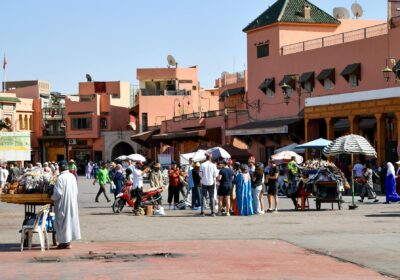
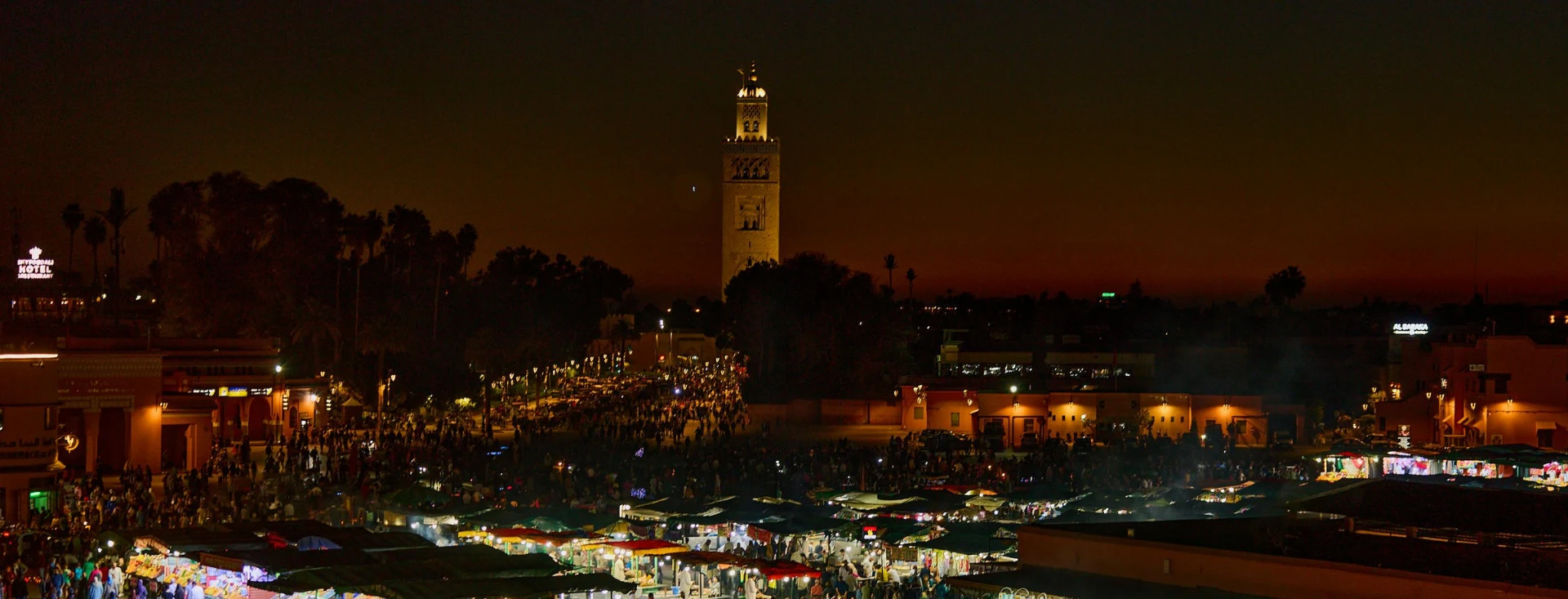
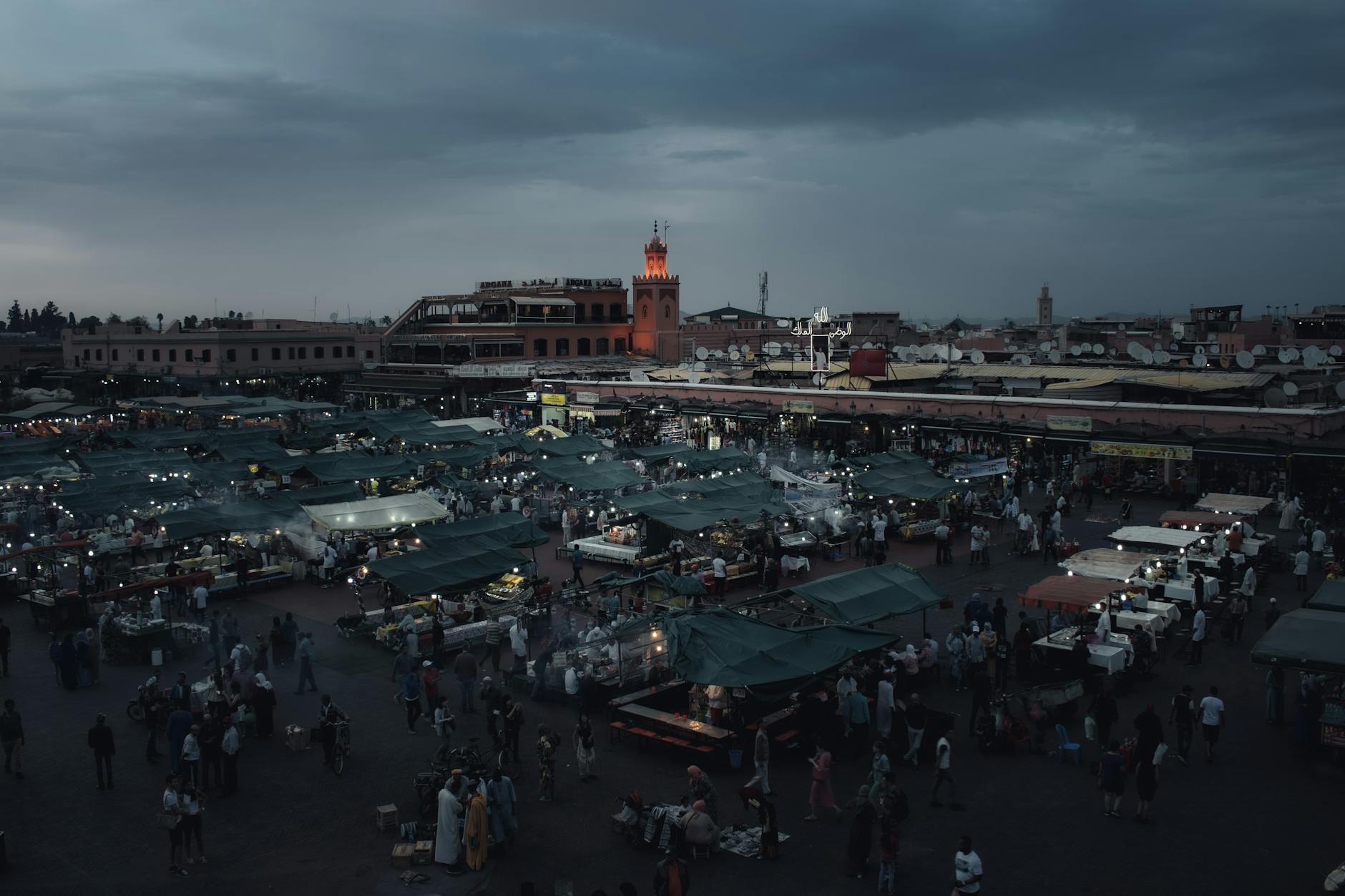
Stop 7: Dinner — Mechoui at Jemaa el-Fna (19:30)
As the night market assembles on the square, head to the mechoui stalls at the northern edge — lamb roasted underground all day, sold by weight, eaten with cumin salt and bread. Pull up a plastic stool and point to the cut you want. This is the most authentic $10 dinner in Morocco.
Alternatively: the kefta tagine stalls in the centre of the square (stalls 1–14 are the best established). Loud, fun, and genuinely excellent. Expect to pay $12–18 for a full meal.
Cost: 100–180 MAD ($10–18)
Stop 8: Late Night — Makouda & Avocado Juice (21:30)
The Jemaa el-Fna orange juice stalls (open until midnight) are the most famous end to a Marrakech evening — freshly squeezed for 4 MAD. Add a plate of makouda (fried potato fritters, 10 MAD) from the street stall on the south edge of the square. Standing, eating, watching the last performers of the night — this is Marrakech.
Organised Food Tour vs Self-Guided
Our guided food tours ($45–65/person, 3.5 hours, max 6 people) include: a licensed guide who speaks to vendors in Darija to get the best prices and most authentic products, all tasting food and drinks, medina navigation, and explanation of the cultural context of each dish. Self-guided with this article works well too — but the guide adds significant depth, particularly in the spice souk.
Frequently Asked Questions: Marrakech Food Tour
Is street food in Marrakech safe to eat?
Yes — with common sense. Choose stalls with high turnover (the queue is the food safety guarantee). Avoid anything that’s been sitting out for hours. The Jemaa el-Fna food stalls are inspected by the municipality and have served millions of tourists safely. See our full Morocco safety guide.
Do I need to book a food tour in advance?
For organised tours, book 48–72 hours ahead in peak season (October, April). Contact Desert Tripper for availability and group rates.
Further Reading & Official Resources
Further Reading & Official Resources
Plan Your Morocco Trip with Desert Tripper
Desert Tripper is a Marrakech-based tour operator specialising in private Sahara desert tours, city breaks, and custom Morocco itineraries. Our team of licensed local guides has been leading travellers through Morocco’s most extraordinary landscapes for over a decade.
We offer:
- Private 3-day Sahara tours from Marrakech or Fes — fully customised for your group
- Luxury desert camps in Merzouga — private tents, en-suite bathrooms, candlelit dinners in the dunes
- Custom Morocco itineraries — 7, 10, or 14 days, built around your interests and budget
Get a free custom quote — we respond within 12 hours with a tailored itinerary for your dates and group size.